 Curations



selling luxury bags
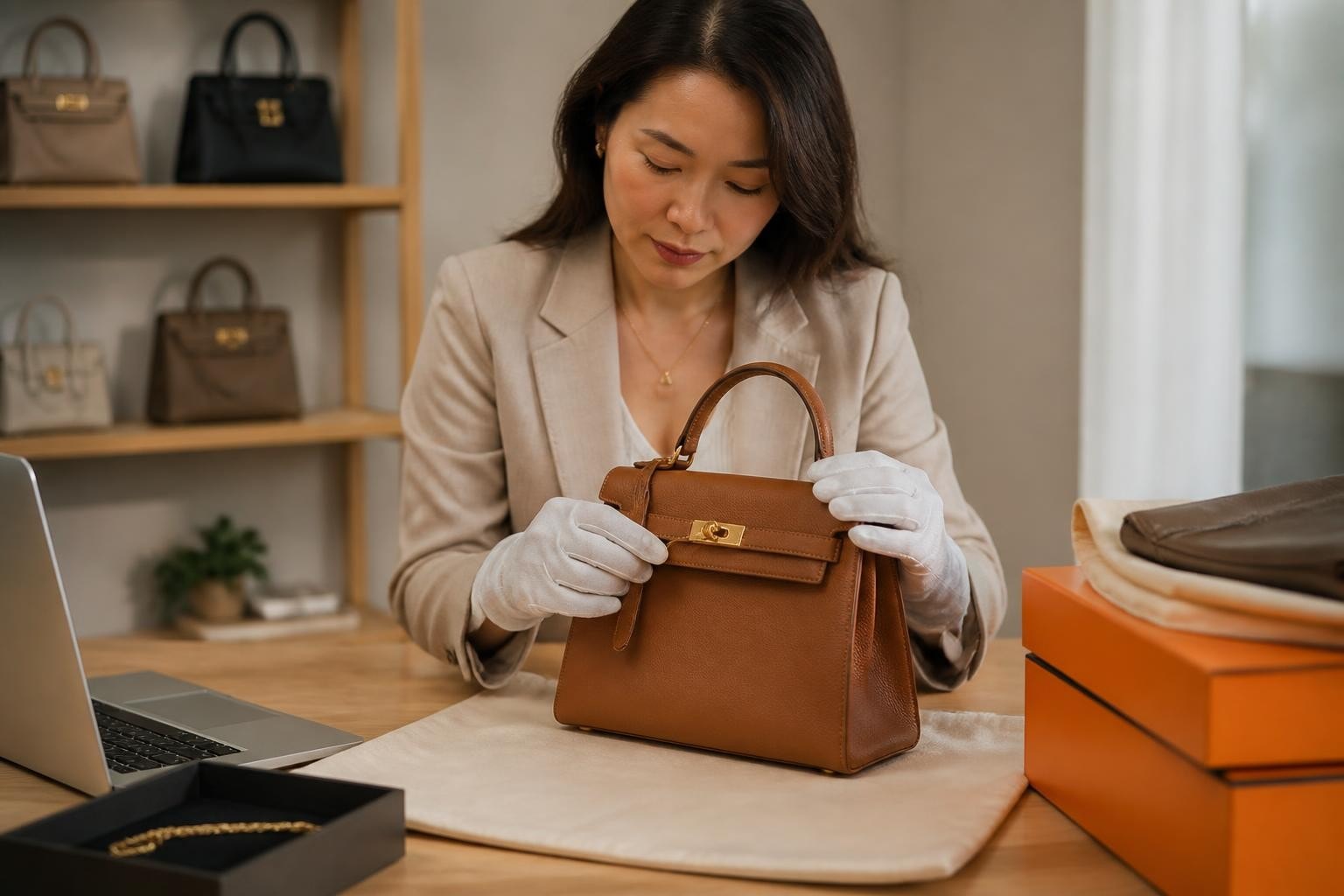
Selling a luxury handbag is about more than finding someone willing to buy it. When the piece is a Hermès Birkin, Kelly, Mini Kelly, or another highly collectible designer handbag, the details surrounding authentication, condition, provenance, pricing and presentation can have a significant impact on how the bag is positioned in the luxury resale market.
Whether you are downsizing a collection, changing your style, looking to sell an inherited handbag, or simply want to unlock the value of a piece you no longer carry, choosing the right selling method matters.
At BirkinVault, we specialize in authentic Hermès handbags and provide a professional route for owners looking to sell or consign qualifying luxury pieces. Our current seller information describes both direct purchase and consignment options, with valuation based on factors including condition, leather, color, size, rarity and market demand.
What Is the Best Way to Sell a Luxury Handbag?
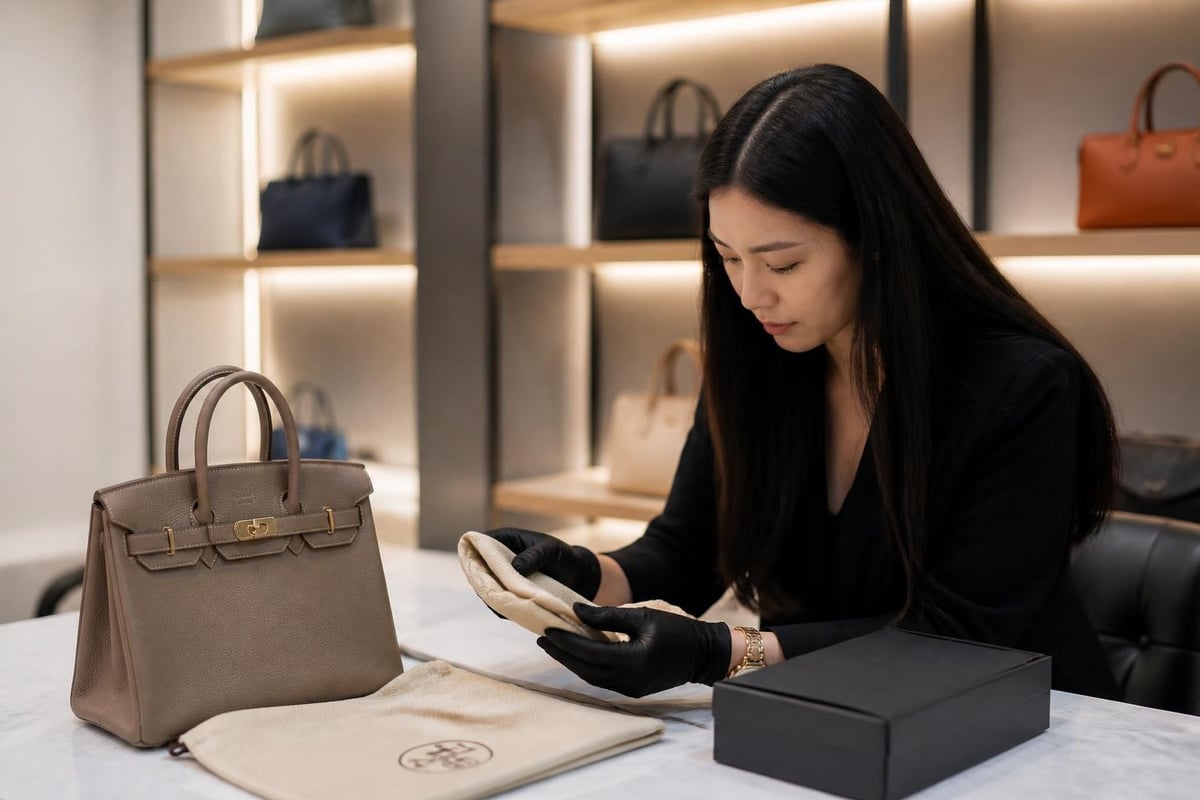
There are several ways to sell a designer handbag, but they generally fall into three categories:
- Direct sale to a luxury buyer or reseller
- Consignment through a specialist luxury marketplace
- Private sale directly to another buyer
Each option has different advantages.
A direct sale can provide greater simplicity and a faster transaction because the seller does not have to wait for a final retail buyer.
Consignment can provide the opportunity to achieve a higher selling price because the handbag is professionally marketed to prospective buyers.
A private sale may give the owner greater control over the asking price, but it also places responsibility for authentication, photography, marketing, communication, payment and shipping on the seller.
For valuable Hermès handbags, professional handling can be particularly important.
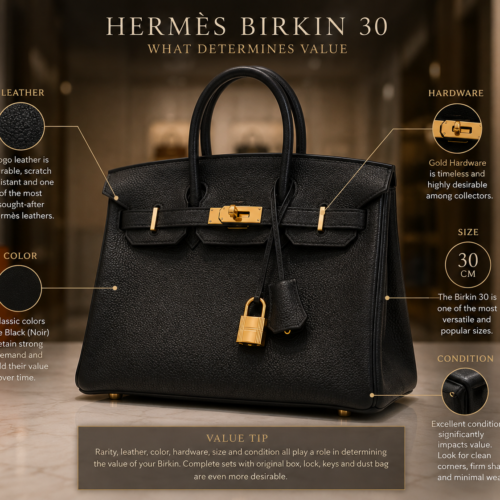
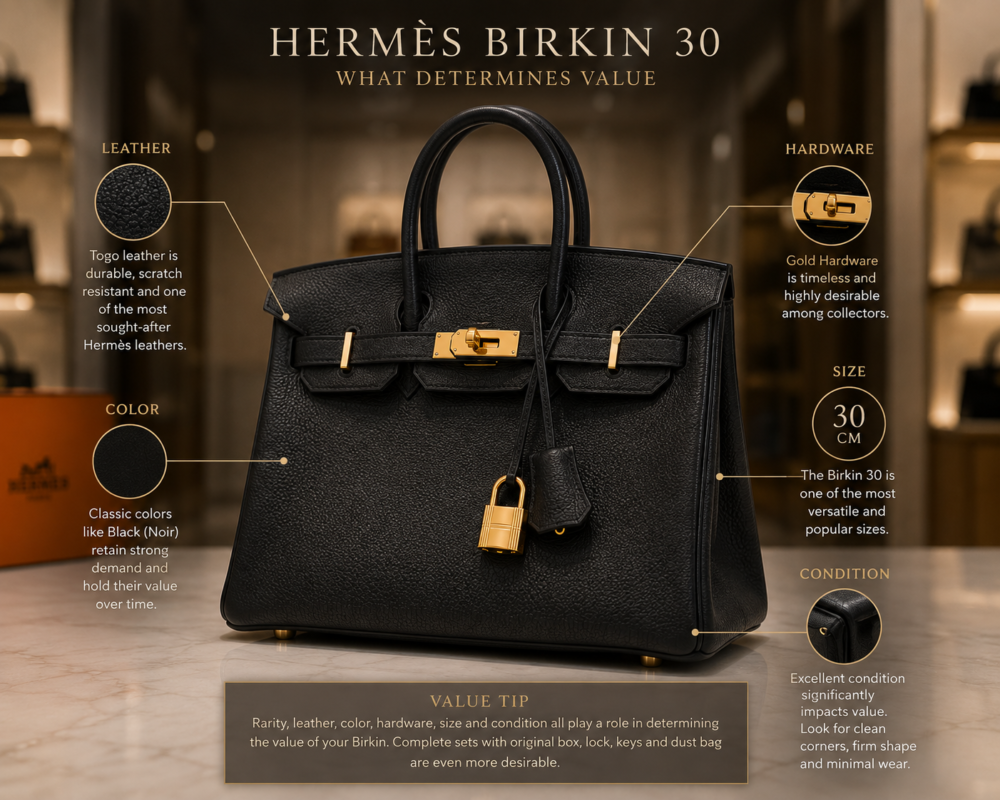
Selling a Hermès Birkin: What Determines Its Value?
Not every Birkin has the same resale value.
Two handbags that look similar at first glance can have substantially different market values because of differences in leather, size, color, hardware, year, condition and rarity.
The most important factors include:
- Hermès model
- Birkin size
- Leather
- Color
- Hardware
- Condition
- Year/date stamp
- Rarity
- Special Order status
- Exotic materials
- Original accessories
- Market demand
- Provenance where applicable
BirkinVault’s current selling guidance similarly identifies condition, leather, size, color, hardware, rarity and market demand as important valuation factors.
Which Luxury Bags Are Most Desirable on the Resale Market?
Demand varies over time, but certain Hermès models consistently attract significant collector attention.
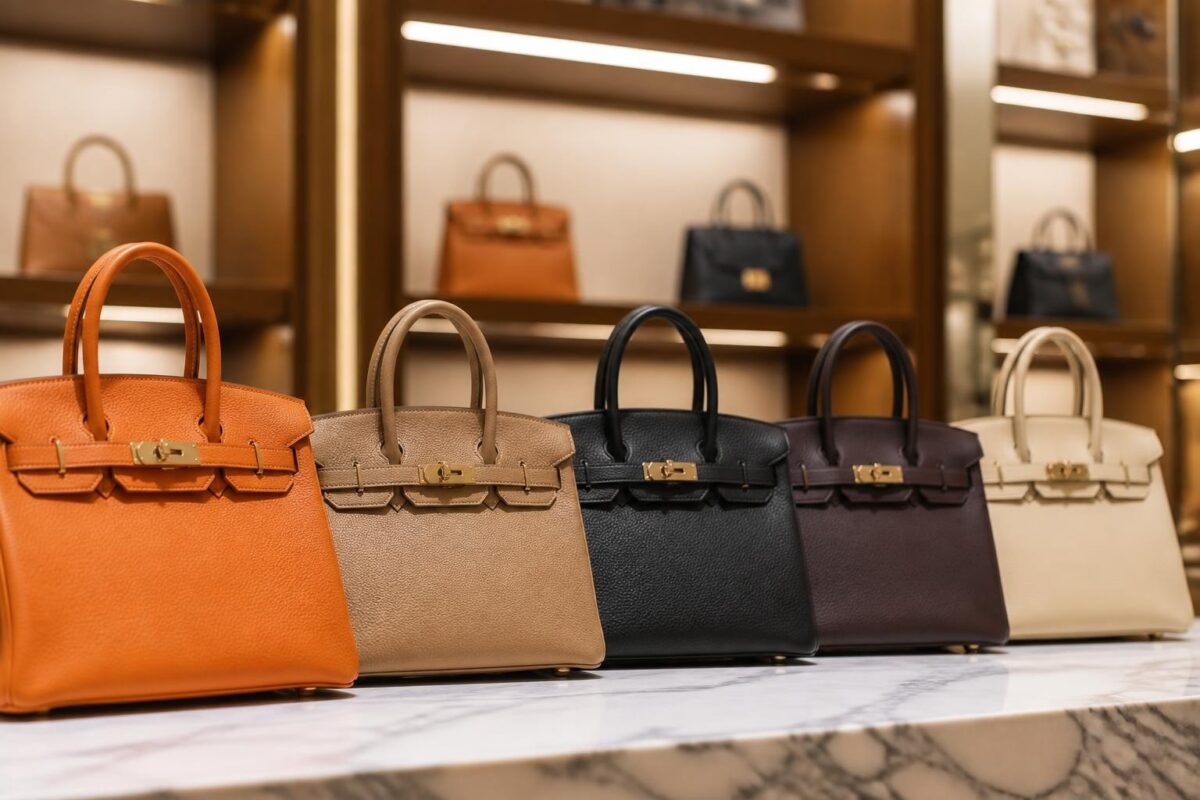
Hermès Birkin
The Birkin remains one of the most recognizable luxury handbags in the world.
Different sizes—including Birkin 25, 30, 35 and 40—appeal to different collectors and lifestyles.
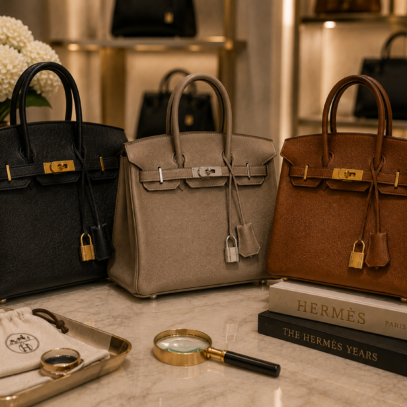
Leather, color and hardware can completely change the character of the same Birkin model.
Hermès Kelly
The Kelly is another highly collectible Hermès handbag.
Its structured silhouette and distinctive closure make it particularly desirable among collectors.
Hermès Mini Kelly
The Mini Kelly has become especially sought after because of its compact proportions and strong collector interest.
Hermès Constance
The Constance offers a completely different silhouette and is often chosen by buyers looking for a smaller crossbody-style Hermès handbag.
BirkinVault currently states that its seller program considers qualifying Hermès pieces including Birkin, Kelly, Mini Kelly, Constance, Lindy, Picotin, Evelyne, Garden Party and other Hermès handbags.
How Much Is My Luxury Handbag Worth?
There is no universal price for a pre-owned luxury handbag.
An online asking price does not necessarily represent the actual market value of a bag.
A proper valuation should consider the specific handbag, rather than relying solely on the model name.
For example, the following two Birkin bags could have very different values:
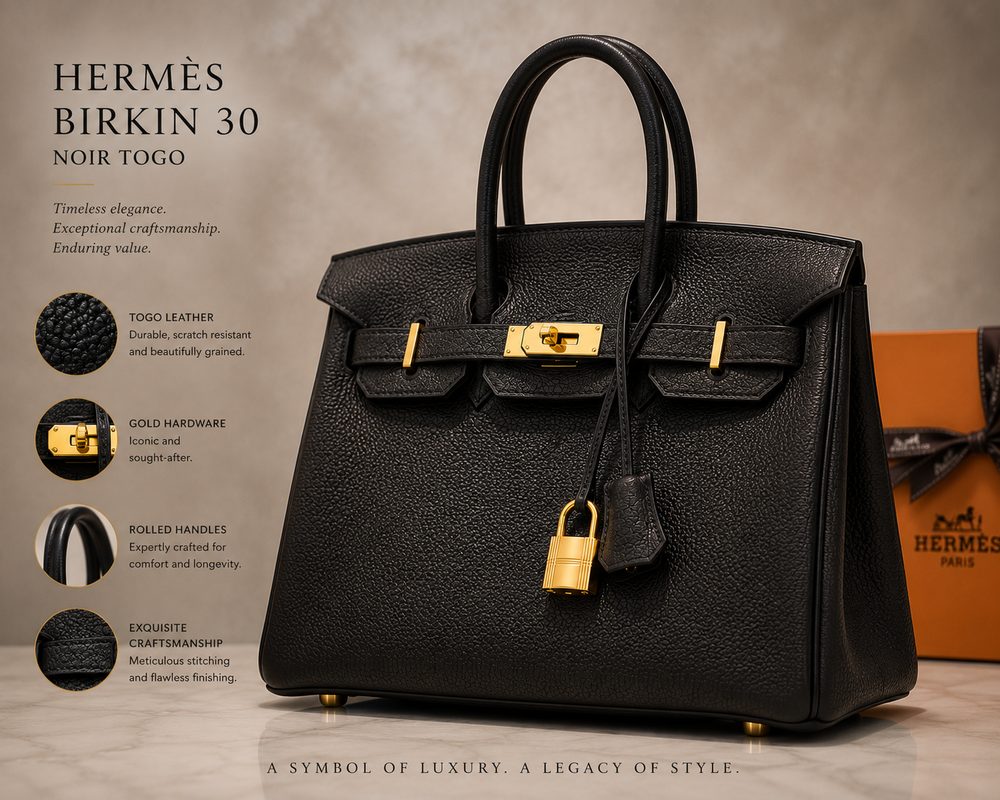
Birkin 30 — Togo leather — common color — visible wear
versus
Birkin 30 — rare leather — highly sought-after color — excellent condition — complete set
This is why sellers should provide detailed information and clear photographs before expecting an accurate valuation.
What Information Should You Provide When Selling a Luxury Bag?
The more complete your submission, the easier it is for a specialist to evaluate the piece.
Prepare:
1. Brand and Model
For example:
Hermès Birkin 30
2. Size
Examples:
- Birkin 25
- Birkin 30
- Birkin 35
- Birkin 40
3. Leather
Examples include:
- Togo
- Clemence
- Epsom
- Swift
- Box Calf
- Alligator
- Crocodile
4. Color
Provide the official color name if known.
5. Hardware
Specify whether the handbag has Gold Hardware, Palladium Hardware or another configuration.
6. Date/Blind Stamp
If known, provide the relevant stamp information.
7. Condition
Be honest about:
- Corners
- Handles
- Interior
- Hardware
- Leather
- Base
- Scratches
- Stains
- Odors
- Restoration
8. Accessories
Tell the buyer or reseller whether the bag includes:
- Original box
- Dust bag
- Lock
- Keys
- Clochette
- Raincoat
- Receipt
- Authenticity documentation
- Other original accessories
How to Photograph a Luxury Handbag Before Selling
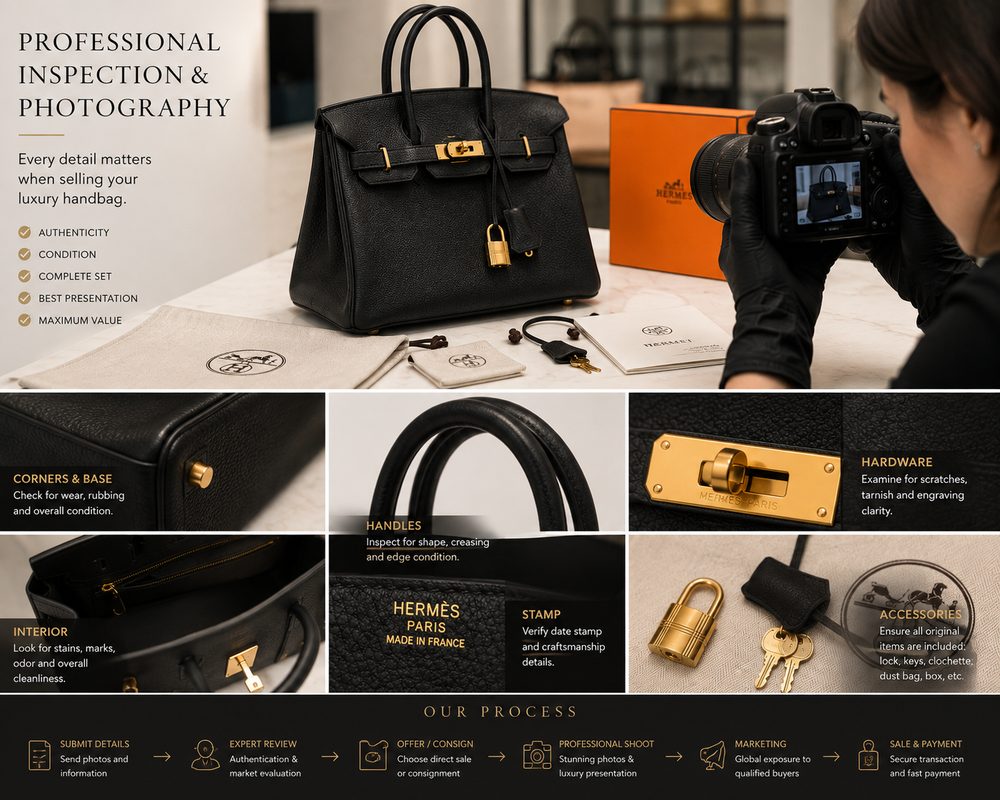
High-quality photographs can make a significant difference when presenting a luxury handbag.
Avoid relying on one photograph.
Take clear images of:
- Front
- Back
- Both sides
- Base
- Four corners
- Handles
- Interior
- Hardware
- Closure
- Stamp/date information
- Accessories
- Any imperfections
Natural, even lighting is preferable.
Most importantly, do not hide imperfections.
A transparent description of condition builds confidence and helps prevent disagreements later.
Should You Sell Your Luxury Bag Outright or Use Consignment?
This is one of the most important decisions a seller makes.
Direct Luxury Handbag Sale
A direct sale means a specialist evaluates the handbag and, if accepted, purchases it from you.
Advantages
- Simpler transaction
- No need to wait for an end buyer
- Faster resolution
- Seller receives an agreed purchase price
- Specialist handles subsequent resale
The trade-off is that the direct purchase offer may be lower than the eventual retail selling price because the buyer assumes the costs and risks of reselling the handbag.
Luxury Handbag Consignment
With consignment, the handbag is marketed for sale while ownership arrangements and the seller’s payout are governed by the agreed consignment terms.
Potential advantages include:
- Greater exposure to collectors
- Professional photography
- Professional product presentation
- Specialist pricing
- Targeted marketing
- Potentially higher seller proceeds
BirkinVault’s current consignment information describes professional photography, marketing, international exposure and an agreed commission deducted after a successful sale.
How Luxury Handbag Consignment Works
A professional consignment process should be clear from the beginning.
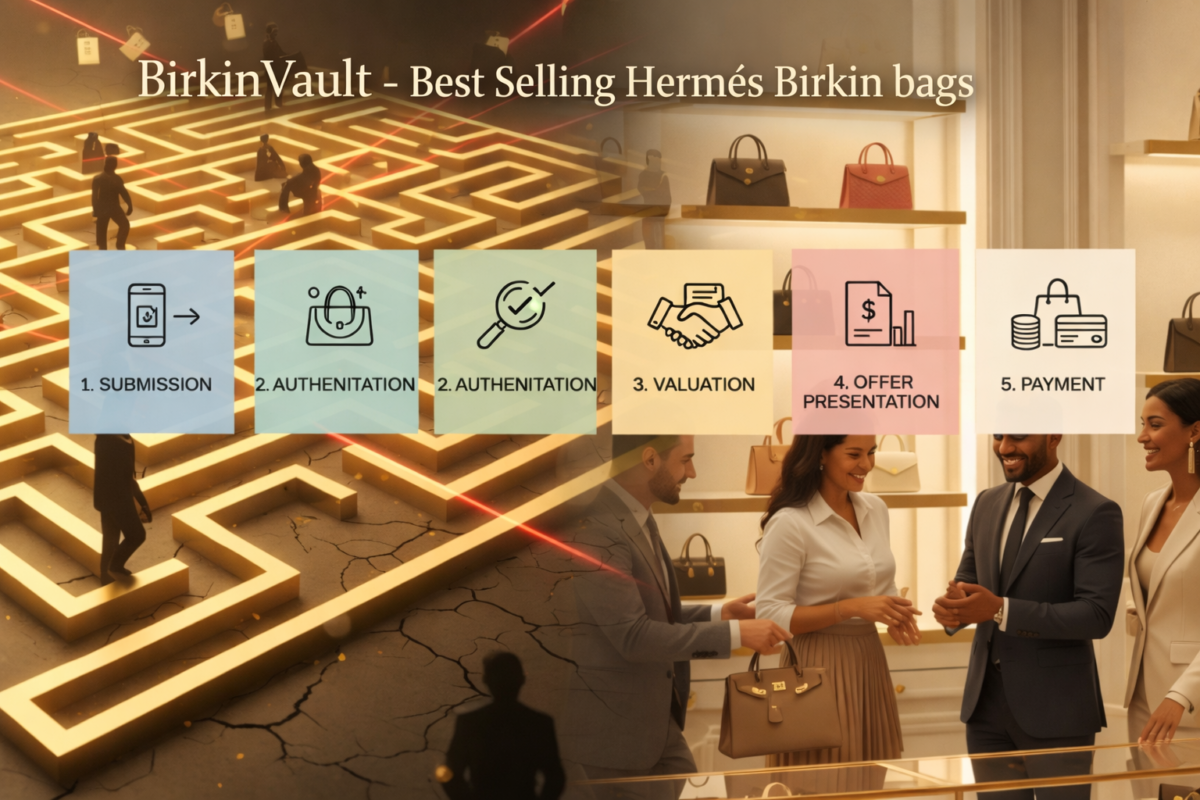
Step 1: Submit Your Handbag
Provide the model, size, leather, color, hardware, condition and photographs.
Step 2: Preliminary Evaluation
The specialist reviews the information and determines whether the handbag is suitable for the marketplace.
Step 3: Authentication and Inspection
The handbag is examined before being accepted for sale.
Step 4: Valuation and Pricing
The seller and consignment specialist agree on the appropriate selling strategy.
Step 5: Professional Presentation
The handbag is photographed, described and marketed to prospective buyers.
Step 6: Sale
Once a buyer purchases the handbag and the transaction is completed, the agreed commission is deducted and the seller receives the remaining proceeds according to the consignment agreement.
This basic process is consistent with the seller workflow currently published by BirkinVault.
What Makes a Luxury Handbag More Valuable?
Certain characteristics can increase collector interest.
Rare Colors
Limited or discontinued colors can attract collectors when demand is strong.
Exotic Leather
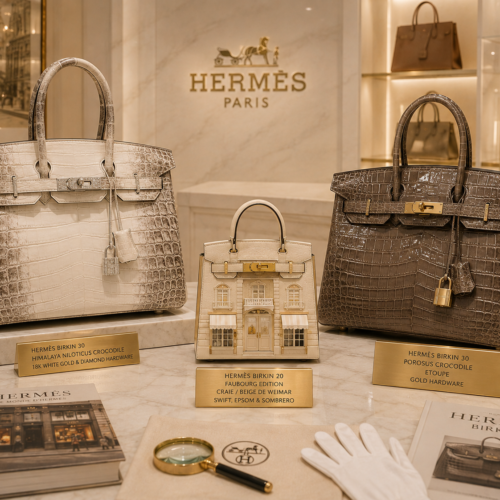
Alligator, crocodile and other exotic configurations occupy a specialized segment of the luxury market.
Excellent Condition
Condition can have a major impact on resale positioning.
Popular Sizes
Certain Birkin sizes may attract stronger demand depending on current buyer preferences.
Rare Configurations
Special Orders, unusual combinations and limited pieces can attract collectors looking for something beyond a standard configuration.
Complete Sets
Original accessories and accompanying documentation, where available and appropriate, can make a handbag more attractive to some buyers.
Does Condition Affect the Resale Price?
Absolutely.
A handbag described as “excellent condition” should be supported by detailed photographs and an accurate description.
When evaluating a pre-owned Birkin, pay particular attention to:
Corners
Look for rubbing or visible wear.
Handles
Check for darkening, scratches, creasing or other signs of use.
Hardware
Inspect for scratches, tarnishing or other condition issues.
Interior
Look for stains, marks and signs of wear.
Leather
Check for scratches, dryness, creasing, discoloration or restoration.
Honest condition reporting protects both the seller and the eventual buyer.
Authentication Is Essential When Selling Luxury Bags
Authentication is one of the most important steps in luxury handbag resale.
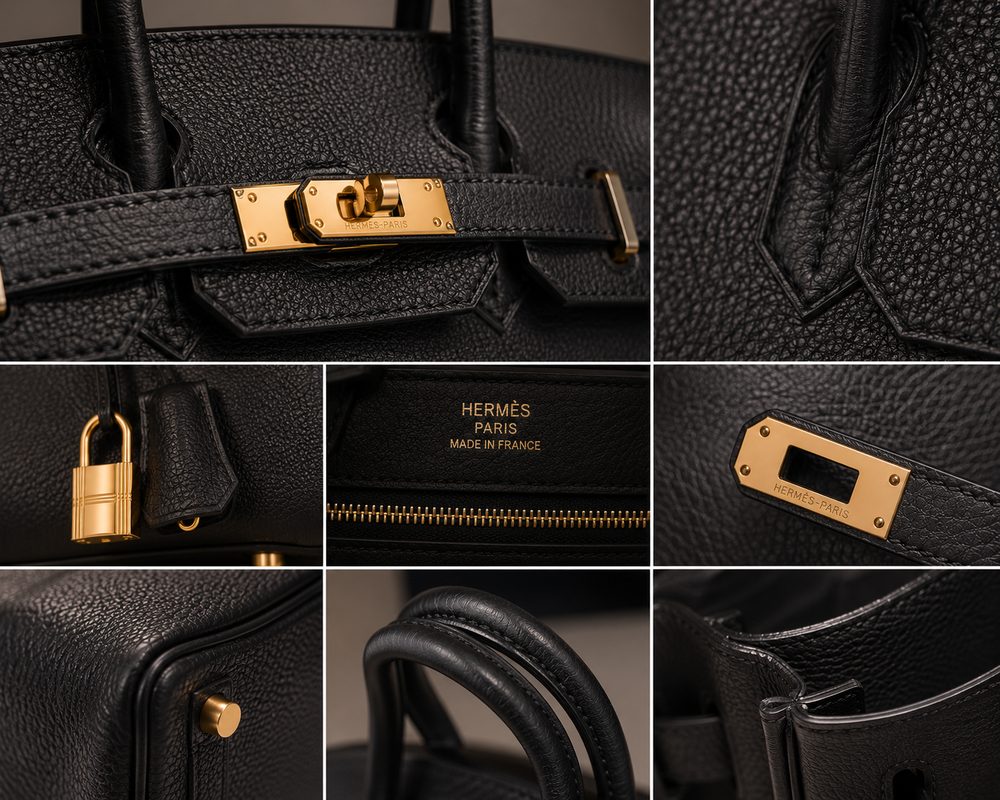
A professional evaluation should consider the handbag as a whole, including:
- Construction
- Stitching
- Leather
- Hardware
- Stamp information
- Proportions
- Craftsmanship
- Accessories
- Overall condition
A single stamp, receipt or accessory should not be treated as standalone proof of authenticity.
BirkinVault states that handbags undergo an authentication review before accepted pieces are offered for sale.
How to Get the Best Price When Selling a Designer Bag
If your objective is to maximize the value of your handbag, preparation matters.
Keep the Original Accessories
If you still have the original box, dust bag, lock, keys and other accessories, keep them together.
Preserve the Condition
Avoid unnecessary handling, overfilling and exposure to moisture.
Be Honest About Wear
Transparent descriptions make professional valuation easier.
Use Professional Photography
Clear photographs make it easier for specialists and prospective buyers to understand the piece.
Choose the Right Selling Channel
A highly collectible Birkin may benefit from specialist exposure rather than being marketed as an ordinary second-hand handbag.
Don’t Choose a Price Based Only on Another Listing
An asking price isn’t necessarily the price a buyer will actually pay.
Selling Luxury Bags Online vs Selling Privately
Private selling can appear attractive because there is no intermediary.
However, the seller must typically handle:
- Buyer enquiries
- Authentication questions
- Negotiation
- Payment
- Shipping
- Insurance
- Returns
- Fraud prevention
- Product photography
- Marketing
A specialist marketplace can take many of these responsibilities away from the seller.
For a high-value Hermès handbag, the convenience and professional presentation can be important considerations.
Why Sell Your Hermès Bag Through BirkinVault?
BirkinVault is focused specifically on Hermès Birkin handbags and luxury resale.
The company currently promotes:
- Professional authentication review
- Market valuation
- Professional photography
- Luxury marketing
- Collector exposure
- Secure transactions
- Dedicated customer support
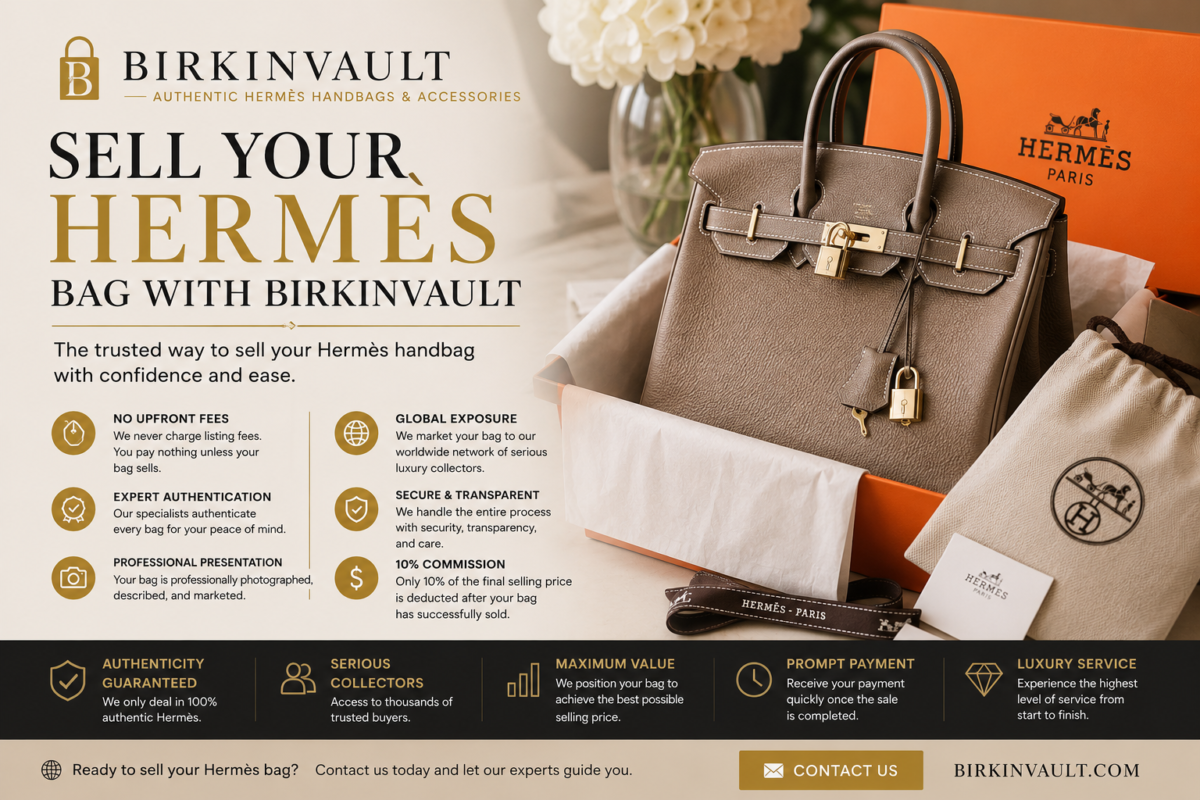
- No upfront listing fees on its dedicated seller program
- A stated 10% commission for qualifying Hermès handbags after successful sale
That specialization allows the selling experience to be built around the characteristics that matter to Hermès collectors.
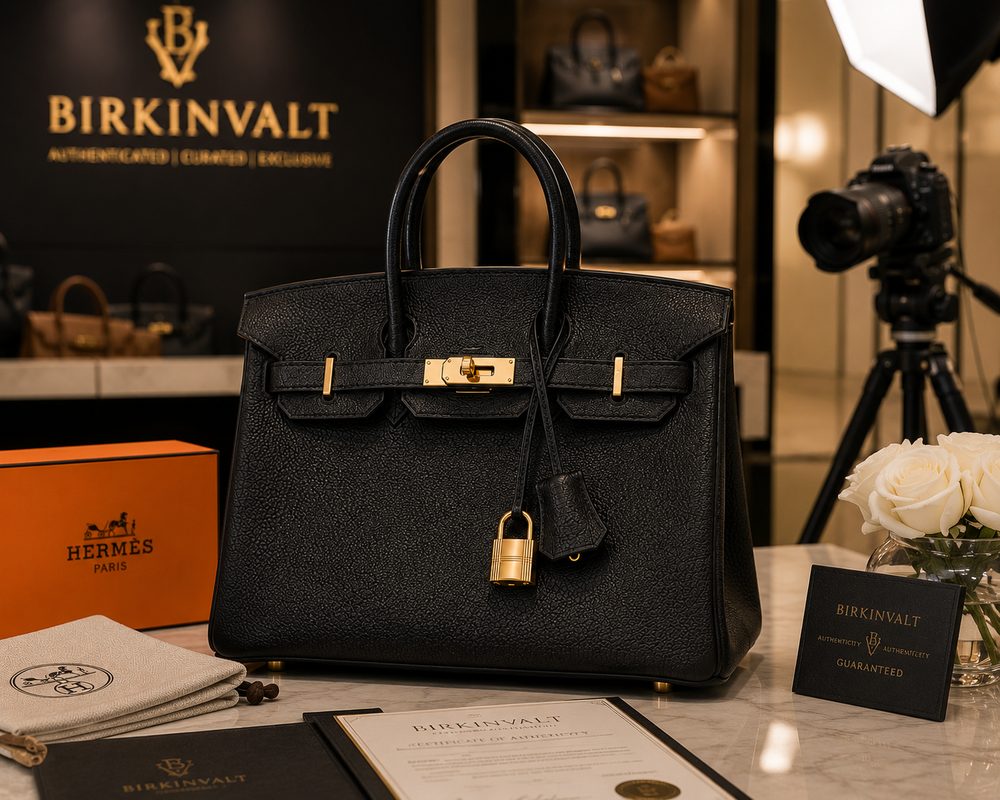
[IMAGE 7 — BIRKINVALT SELLER EXPERIENCE]
Recommended image: Elegant BirkinVault luxury presentation featuring a Hermès Birkin, premium packaging, a camera and discreet luxury showroom environment.
ALT TEXT: BirkinVault luxury handbag selling and consignment service
Suggested filename:birkinvault-luxury-handbag-selling-consignment.jpg
Sell Your Hermès Birkin With BirkinVault
If you own a Hermès Birkin that you are considering selling, start by gathering the details of your handbag.
Tell us:
- Model
- Size
- Leather
- Color
- Hardware
- Year/date stamp
- Condition
- Accessories
- Asking price, if you have one
- Clear photographs
BirkinVault can then review the information and determine whether the handbag is suitable for a direct purchase or consignment opportunity. Its published seller process begins with submitting the handbag’s details and photographs for review.
Ready to explore your options?
Sell Your Hermès Bag with BirkinVault →
Frequently Asked Questions About Selling Luxury Bags
What is the best way to sell a luxury handbag?
The best method depends on your priorities. Direct sale can be simpler and faster, while consignment may provide greater exposure and potentially a higher selling price.
How much is my Hermès Birkin worth?
The value depends on the specific model, size, leather, color, hardware, condition, rarity, accessories and current market demand.
Does BirkinVault buy Hermès bags directly?
BirkinVault’s published selling information states that it may purchase qualifying Hermès Birkin bags outright following evaluation and authentication.
Does BirkinVault offer consignment?
Yes. BirkinVault currently promotes consignment as an option for qualifying Hermès handbags.
Does BirkinVault charge an upfront listing fee?
The dedicated BirkinVault selling page currently states that there are no upfront listing, marketing or advertising fees and that its stated commission is deducted after a successful sale.
What Hermès bags can I sell?
The current seller page lists qualifying Birkin, Kelly, Mini Kelly, Constance, Lindy, Picotin, Evelyne, Garden Party and other Hermès handbags.
How long does it take to sell a luxury handbag?
There is no universal timeframe. Demand, price, condition, rarity, model and current collector interest can all affect how quickly a handbag sells.
Do I need the original box and receipt?
Not necessarily, but you should disclose exactly what accessories and documentation you have. A missing box or receipt should not automatically be treated as proof that a handbag is inauthentic.
Should I clean my Birkin before selling it?
Avoid attempting aggressive cleaning yourself. Improper cleaning can damage luxury leather and potentially reduce the handbag’s appeal. Professional assessment is preferable when restoration or cleaning is necessary.
Final Thoughts: Selling Luxury Bags With Confidence
Selling a luxury handbag should be approached with the same care as buying one.
For an ordinary designer handbag, choosing a marketplace may be relatively straightforward.
For a Hermès Birkin, Kelly, Mini Kelly or rare luxury handbag, the stakes can be considerably higher.
Authentication, condition, pricing, presentation, buyer access and transaction security all matter.
At BirkinVault, our approach is centered around specialist Hermès knowledge, professional presentation and access to luxury collectors.
If you’re ready to explore the value of your handbag, submit the details of your piece and let the BirkinVault team help you determine whether a direct sale or consignment is the right route.
Your Birkin has a story. Let its next chapter begin with BirkinVault.