
 Curations




Vintage Hermès handbags occupy a special place in the world of luxury collecting.
Unlike contemporary handbags, vintage Hermès pieces can offer something that newer bags cannot easily reproduce: history.
A vintage Kelly can represent decades of Hermès design heritage. An older Birkin can capture an earlier period of the house’s craftsmanship. A discontinued color or leather can provide collectors with access to configurations that may no longer be produced in the same form.
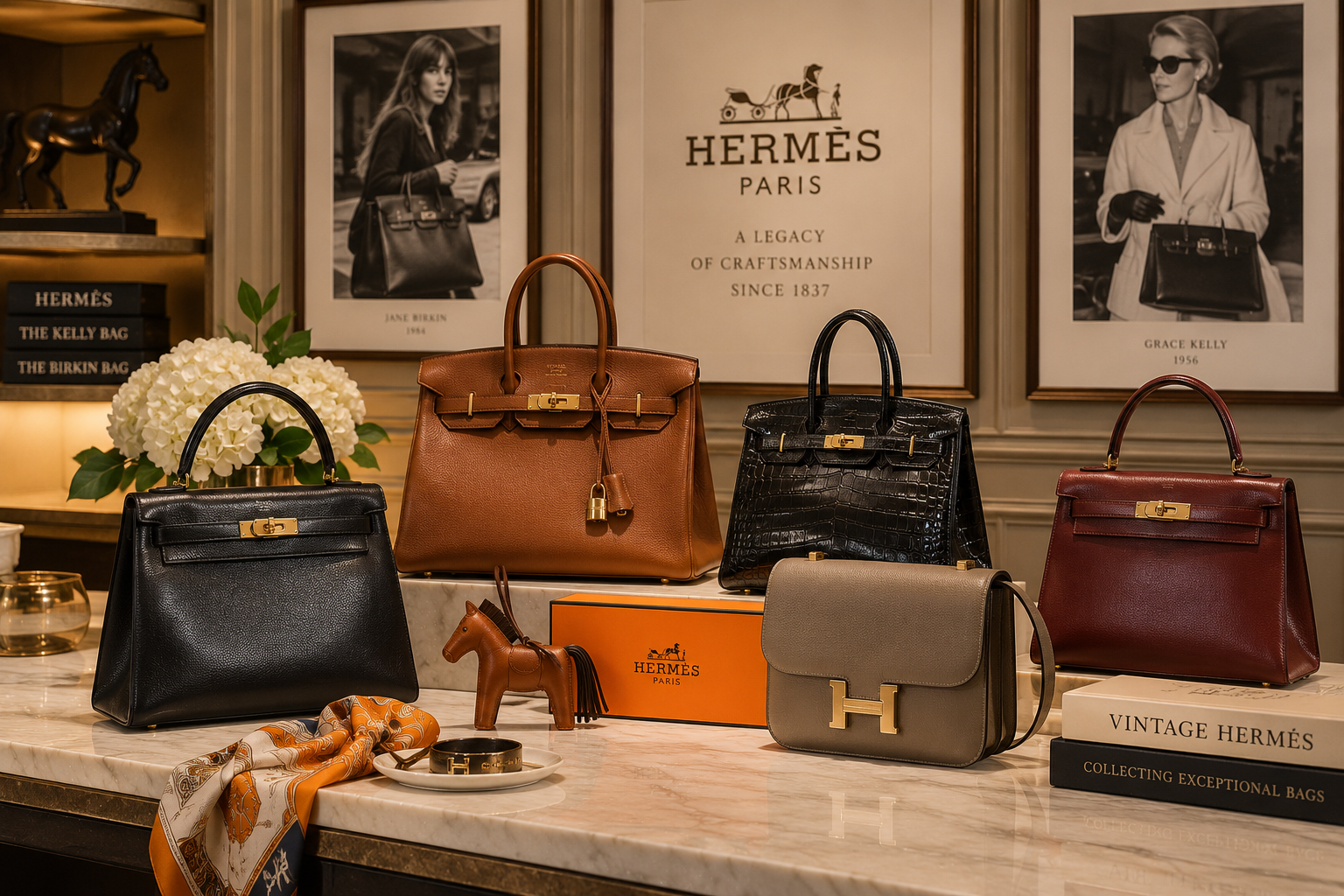
Hermès itself traces the origins of the Kelly to a design created by Robert Dumas in the 1930s. The bag became internationally associated with Grace Kelly after a widely published 1956 photograph, after which Hermès officially named the style the Kelly.
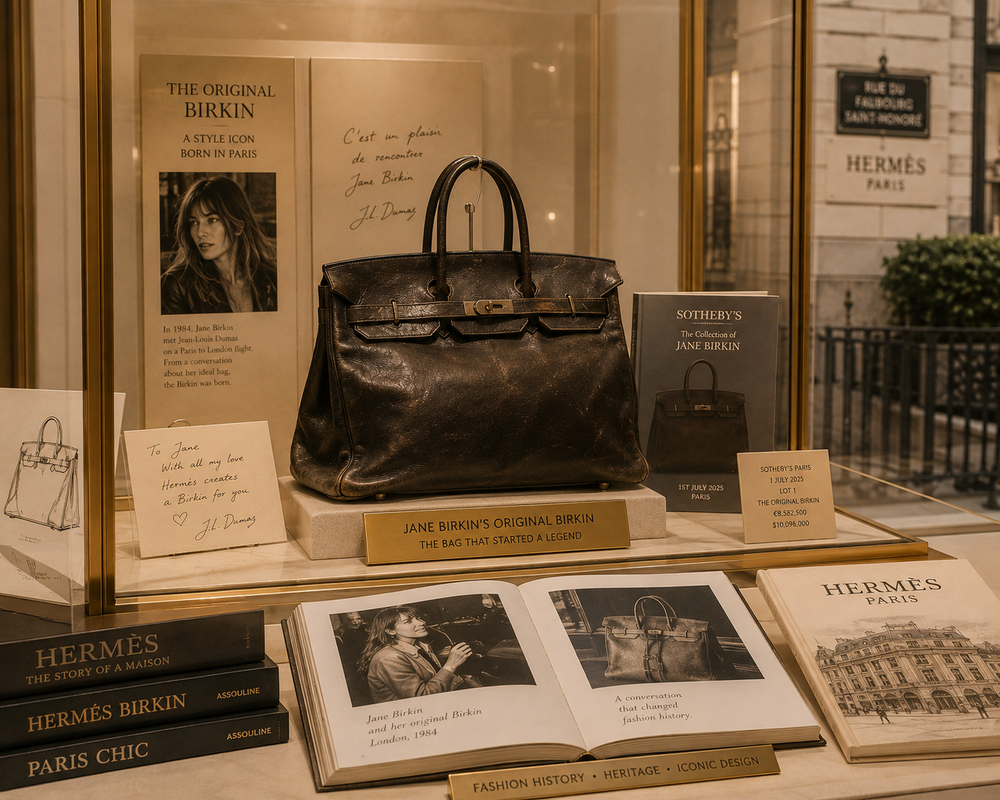
The Birkin followed decades later. Hermès dates its creation to 1984, when Jean-Louis Dumas developed the design following his meeting with Jane Birkin on a Paris-to-London flight.
For collectors today, vintage Hermès handbags offer the opportunity to own a piece of that continuing history.
What Is a Vintage Hermès Handbag?
The term vintage Hermès handbag generally refers to an older Hermès handbag that has acquired historical, design or collector interest.
There is no single universal age at which every Hermès handbag becomes “vintage.”
Collectors may use the term when discussing:
- Older Kelly bags
- Early Birkin bags
- Vintage Constance bags
- Vintage Box leather handbags
- Discontinued colors
- Older exotic-leather pieces
- Archival designs
- Rare configurations
- Handbags from earlier production periods
Age alone does not determine whether a handbag is desirable.
A vintage bag’s appeal can depend on its model, leather, color, condition, hardware, provenance, rarity and authenticity.
Why Collect Vintage Hermès Handbags?
Vintage Hermès handbags appeal to collectors for several reasons.
1. History
Older handbags can provide a tangible connection to earlier periods of Hermès design.
2. Discontinued Colors
Vintage examples can offer access to colors that may no longer be available in current collections.
3. Vintage Leathers
Some older handbags are particularly sought after for their leather characteristics and patina.
4. Unique Configurations
Collectors can encounter combinations of size, leather, color and hardware that are difficult to find today.
5. Patina
Certain leathers develop distinctive visual character as they age.
Hermès itself notes that its natural heritage leather can develop a patina over time, becoming more distinctive as it ages.
6. Craftsmanship
Hermès continues to emphasize its leatherworking heritage and artisanal construction. The maison states that its bags are handcrafted in France and that leather workers use techniques including saddle stitching in their construction.
The Most Collectible Vintage Hermès Handbags
Several Hermès handbag families stand out in the vintage market.
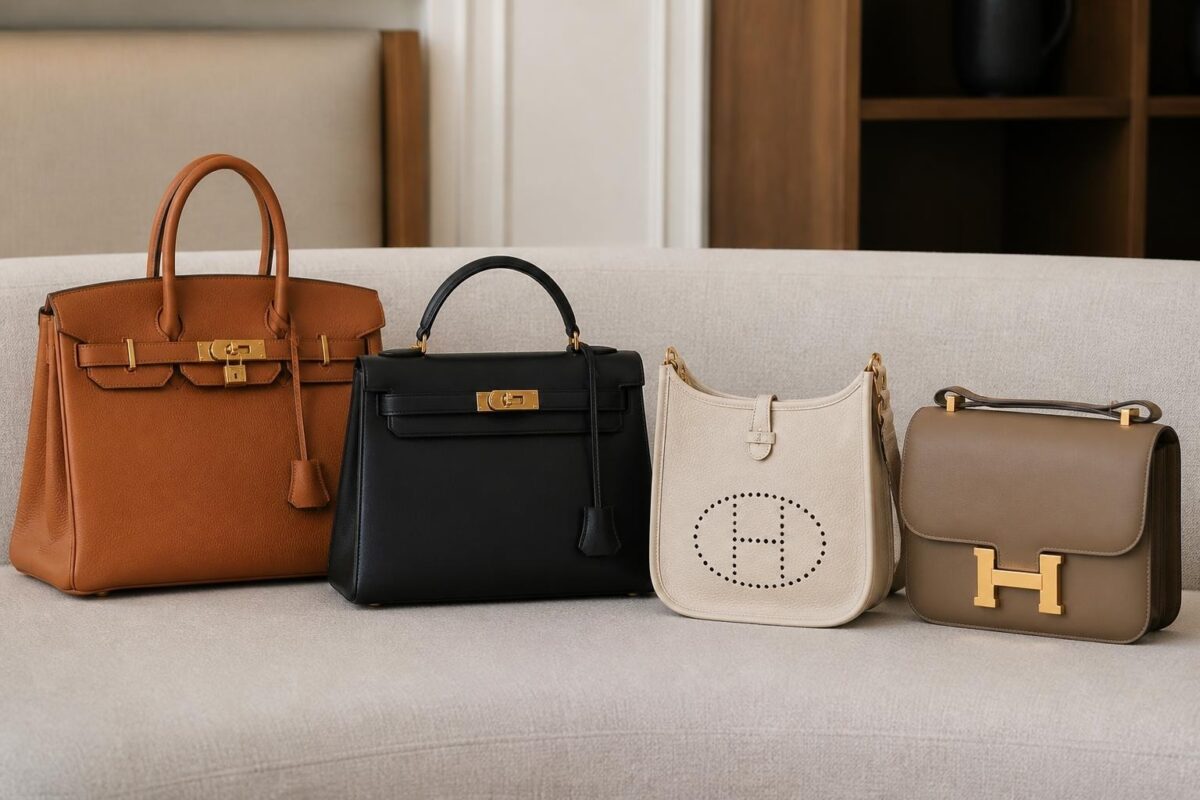
Vintage Kelly
Vintage Birkin
VintageConstance
VintageBolide
VintageHerbag
VintageJige
Vintage exotic Hermès handbags
Each appeals to a somewhat different collector.
Vintage Hermès Kelly
The Kelly is one of the most historically important Hermès handbags.
Hermès traces the design to the 1930s, when Robert Dumas created the ladies’ bag with straps. The handbag became associated with Grace Kelly after her famous 1956 appearance carrying the design, and Hermès subsequently named it the Kelly.


Why Vintage Kelly Bags Are Popular
Collectors may appreciate:
- Historical importance
- Structured silhouette
- Sellier and Retourne construction
- Vintage leather
- Older hardware
- Discontinued colors
- Smaller vintage sizes
- Patina
- Provenance
Sotheby’s 2026 auction catalog includes examples such as a Vintage Rouge H Box Kelly 28 Retourne from 1978 and a Vintage Rouge H Box Mini Kelly 20 from 1987, demonstrating the continued presence of vintage Kelly bags in major collector auctions.
Vintage Hermès Birkin
The Birkin is younger than the Kelly but has become one of the most recognizable handbags in modern luxury.
Hermès dates the creation of the Birkin to 1984, following the meeting between Jane Birkin and Jean-Louis Dumas.


Vintage Birkins can be particularly interesting when they feature:
- Older leathers
- Discontinued colors
- Early production
- Unusual hardware
- Rare configurations
- Excellent condition
- Documented provenance
Age alone, however, should never be used as proof that a Birkin is more valuable.
A newer rare configuration can be more desirable than an older standard example.
Vintage Hermès Constance
The Constance has its own important place in Hermès history.
Hermès lists the Constance among its iconic leather-goods designs, and the style offers a smaller alternative to the larger Birkin and Kelly silhouettes.
Vintage Constance bags can be appealing because of:
- Compact proportions
- Crossbody versatility
- Signature H clasp
- Vintage colors
- Earlier leather options
- Discontinued configurations
For buyers who prefer a smaller handbag, vintage Constance examples can provide a particularly attractive combination of history and practicality.
Vintage Hermès Leather
Leather is one of the most important factors when evaluating an older Hermès handbag.


Box Calf Leather
Box leather is strongly associated with classic and vintage Hermès handbags.
Its smooth surface can develop a distinctive appearance with age.
Vintage Box leather should be inspected carefully for:
- Scratches
- Creasing
- Surface marks
- Restoration
- Dryness
- Color variation
A certain amount of patina can be attractive to collectors, but condition preferences vary.
Natural Leather and Patina
Some natural leathers develop a deeper tone as they age.
Hermès describes its natural heritage leather as vegetable-tanned cowhide that develops a patina over time.
This means that age can sometimes add character rather than simply reducing desirability.
Togo
Togo is a grained calfskin with a distinctive textured surface.
Hermès notes that Togo first appeared in its collections in 1997.
Therefore, a handbag described as a vintage Togo Hermès bag should be dated carefully rather than assuming that every older Hermès handbag could have been produced in Togo.
Swift
Swift has a smooth and supple appearance with strong color expression.
Older Swift examples should be inspected for:
- Scratches
- Surface marks
- Softening
- Shape changes
- Color variation
Clemence
Clemence is a soft, grained leather that can develop a relaxed appearance over time.
On vintage handbags, buyers should pay particular attention to:
- Slouching
- Corner wear
- Handle condition
- Surface marks
- Shape retention
Vintage Exotic Hermès Handbags
Vintage Hermès handbags can also be found in exotic materials.
Examples include:
- Crocodile
- Alligator
- Lizard
- Ostrich


Exotic vintage handbags require additional care when evaluating condition.
Inspect:
- Skin texture
- Scale consistency
- Dryness
- Cracking
- Color
- Hardware
- Interior
- Previous restoration
Buyers should also ensure that applicable provenance and wildlife-trade documentation is appropriate for the handbag and transaction.
Vintage Hermès Colors
One of the most exciting aspects of collecting vintage Hermès is discovering older colors.
A vintage handbag may feature:
- Deep reds
- Burgundy
- Classic black
- Brown
- Gold
- Grey
- Green
- Blue
- Orange
- Pink
- Neutral shades
Some colors may have been produced during particular periods and later discontinued or reinterpreted.
For collectors, this can make color research just as interesting as leather research.
Vintage Hermès Hardware
Hardware is another important detail.
Vintage Hermès handbags can be encountered with different hardware finishes and configurations.
Inspect:
- Turn-lock
- Feet
- Buckles
- Rings
- Padlock
- Keys
- Strap hardware
- Zippers
Condition is important.
Normal signs of age can sometimes be expected on a vintage piece, but excessive scratching, plating wear, corrosion or replacement hardware should be disclosed before purchase.
Vintage Hermès Sellier vs. Retourne
Collectors should also understand the difference between Sellier and Retourne construction.
Sellier
Sellier construction has a more defined, structured appearance with visible exterior stitching.
Retourne
Retourne construction involves turning the bag during construction, creating a softer and more rounded appearance.
The choice is largely personal.
Collectors may prefer Sellier for its architectural structure or Retourne for its softer character.
How to Date a Vintage Hermès Handbag
Dating a vintage Hermès handbag can be useful, but it should not be reduced to one feature.
Depending on the production period and model, researchers may examine:
- Stamps
- Date-related markings
- Craftsmanship
- Hardware
- Leather
- Lining
- Construction
- Model characteristics
- Accessories
- Provenance
Older Hermès handbags can differ significantly from contemporary production.
For that reason, online charts should be treated as research tools rather than absolute authentication systems.
Vintage Hermès Authentication
Authentication is one of the most important parts of buying a vintage Hermès handbag.
Older handbags can be particularly challenging because construction methods, stamps, materials and hardware can change over decades.
A professional evaluation should consider the complete handbag.
Examine the Construction
Look at:
- Shape
- Stitching
- Seams
- Edges
- Proportions
- Interior construction
Examine the Leather
The material should be consistent with the claimed leather and period.
Examine Hardware
Closures, feet, rings, padlocks and other hardware should be assessed together.
Examine Markings
Stamps and date-related markings should be interpreted according to the relevant production period.
Examine Provenance
Supporting documentation can help establish the handbag’s history.
Examine Accessories
Original boxes, dust bags, keys, clochette and other accessories can provide useful context.
However:
No single stamp, receipt, box or accessory should be treated as conclusive proof of authenticity.
For high-value vintage Hermès handbags, professional authentication is strongly recommended.
Vintage Hermès Condition Guide
Condition is one of the most important considerations when buying a vintage handbag.
A proper inspection should include:
Exterior Leather
Check for:
- Scratches
- Scuffs
- Stains
- Creases
- Cracks
- Color changes
- Dryness
- Restoration
Corners
Examine all four corners for abrasion and wear.
Handles
Look for:
- Darkening
- Cracking
- Deformation
- Excessive wear
- Repairs
Hardware
Inspect for:
- Scratches
- Tarnishing
- Plating loss
- Corrosion
- Replacement parts
Interior
Check for:
- Pen marks
- Stains
- Odor
- Peeling
- Scratches
- Material deterioration


What Does Patina Mean on a Vintage Hermès Bag?
Patina refers to the way certain materials develop character through age and use.
On appropriate leather, patina can produce:
- Deeper color
- Increased visual richness
- Subtle variation
- A more distinctive appearance
Patina is not necessarily damage.
However, collectors should distinguish natural aging from:
- Staining
- Water damage
- Excessive dryness
- Cracking
- Poor restoration
- Color transfer
Whether a collector prefers strong patina or pristine condition is largely a matter of taste.
Vintage Hermès Bags and Restoration
Restoration can be complicated.
A handbag may have received:
- Spa treatment
- Cleaning
- Reconditioning
- Handle repair
- Stitching repair
- Hardware replacement
- Color restoration
Professional restoration can sometimes improve presentation, but it can also change the original character of a vintage handbag.
Ask the seller whether the handbag has ever been restored.
For particularly rare vintage pieces, preserving original condition may be more important than making the bag look new.
How Much Is a Vintage Hermès Handbag Worth?
There is no universal price for a vintage Hermès handbag.
Value depends on:
- Model
- Year or production period
- Leather
- Color
- Size
- Hardware
- Condition
- Rarity
- Provenance
- Accessories
- Market demand
Two handbags that appear similar can sell for very different amounts.
Auction results can provide useful market evidence, but an auction result should not be treated as a guaranteed price for every similar bag.
Sotheby’s continues to offer vintage Hermès handbags in its specialist auctions, including vintage Kelly and Birkin examples, demonstrating the importance of vintage pieces within the broader collector market.
Are Vintage Hermès Handbags a Good Investment?
Vintage Hermès handbags can be collectible luxury assets, but future appreciation is never guaranteed.
A particular handbag’s resale performance can be affected by:
- Market conditions
- Collector preferences
- Condition
- Rarity
- Color
- Leather
- Provenance
- Auction demand
- Economic conditions
A vintage bag should therefore be evaluated first as a luxury collectible rather than as a guaranteed financial investment.
Historical auction prices can provide useful context, but they should not be interpreted as promises of future returns.
Vintage Hermès vs. New Hermès
| Feature | Vintage Hermès | Contemporary Hermès |
|---|---|---|
| Character | Historical | Contemporary |
| Availability | Often secondary market | Current retail/secondary market |
| Colors | May include discontinued shades | Current collection colors |
| Leather | Older and discontinued options possible | Current leather selection |
| Patina | May be present | Usually minimal |
| Condition | Varies considerably | Generally new |
| Provenance | Can be especially important | Current purchase history |
| Collector appeal | Strong for rare examples | Strong for current and limited configurations |
Neither is automatically better.
A collector may prefer vintage because of its history, while another buyer may prefer contemporary craftsmanship and new condition.
How to Buy a Vintage Hermès Handbag
Follow a structured buying process.
Step 1: Identify the Model
Determine whether the handbag is a:
- Kelly
- Birkin
- Constance
- Bolide
- Jige
- Herbag
- Other Hermès design
Step 2: Confirm the Size
Measure the handbag rather than relying exclusively on the seller’s description.
Step 3: Identify the Leather
Ask for the exact leather name.
Step 4: Identify the Color
Confirm the official color where possible.
Step 5: Examine Condition
Request detailed photographs of all surfaces.
Step 6: Research Provenance
Ask about previous ownership and available documentation.
Step 7: Authenticate
Use professional authentication for significant purchases.
Step 8: Compare Market Evidence
Look at relevant auction results and current secondary-market examples.
Step 9: Review Seller Policies
Understand:
Vintage Hermès Buying Checklist
Before purchasing, ask the seller:
About the Bag
- What is the exact model?
- What is the size?
- What is the leather?
- What is the color?
- What hardware does it have?
- What year or production period is it from?
Condition
- Are there scratches?
- Are there stains?
- Has it been restored?
- Has the hardware been replaced?
- Are the corners worn?
- Are the handles darkened?
- Is there an odor?
Accessories
- Are the original keys included?
- Is the lock included?
- Is the clochette included?
- Is the dust bag included?
- Is the original box available?
Provenance
- Is there a receipt?
- Is previous ownership documented?
- Has the bag been serviced?
- Is an authentication report available?
How to Store a Vintage Hermès Handbag
Proper storage is especially important for older leather handbags.
Avoid Direct Sunlight
Sunlight can affect leather and color.
Control the Environment
Avoid excessive humidity, heat and rapid environmental changes.
Use Appropriate Support
Lightly support the handbag to help maintain its shape without overstuffing it.
Use a Breathable Dust Bag
Store the handbag in a suitable breathable dust bag.
Don’t Store Heavy Objects Inside
Excessive weight can distort the structure.
Keep Hardware Protected
Use appropriate protective materials where necessary to reduce contact between metal components and leather.
Don’t Use Household Cleaners
Older leather can react unpredictably to cleaning products.
Why Vintage Hermès Handbags Remain Collectible
The appeal of vintage Hermès goes beyond brand recognition.
A vintage handbag can combine:
History + craftsmanship + rarity + material + color + provenance + condition
That combination is what makes certain vintage pieces particularly interesting to collectors.
The strongest examples often have a compelling story.
A 1970s Kelly in an unusual vintage color tells a different story from a contemporary Kelly.
An early Birkin represents a different chapter of Hermès history from a current-production model.
And an exotic vintage handbag can provide a glimpse into earlier approaches to luxury materials and craftsmanship.
Vintage Hermès Handbags at Auction
Auction houses continue to feature vintage Hermès handbags prominently.
Sotheby’s 2026 handbag auctions include vintage Kelly examples as well as older Birkin and exotic-leather pieces. Its June 2026 New York auction, for example, featured a Vintage Rouge H Box Mini Kelly 20 from 1987 and a Vintage Rouge H Box Kelly 28 Retourne from 1978, alongside other Hermès collector pieces.
Sotheby’s also describes its 2026 Paris handbag auction as featuring both classic staples and collectible variations of Birkin and Kelly designs, including exotic-leather pieces.
This continuing auction presence illustrates that vintage Hermès remains an important part of the international luxury handbag market.
Vintage Hermès Handbags and Provenance
Provenance becomes especially interesting as handbags age.
A documented history may include:
- Original purchase information
- Previous ownership
- Auction history
- Service records
- Authentication reports
- Exhibition history
- Celebrity or notable ownership where properly documented
However, provenance should always be verified.
An unsupported claim that a vintage handbag belonged to a celebrity should not be treated as fact without credible documentation.
The Difference Between Vintage and Rare
These terms are not interchangeable.
Vintage
Primarily describes age or historical period.
Rare
Describes scarcity or unusual availability.
A handbag can be:
- Vintage but relatively common
- Rare but relatively modern
- Vintage and rare
- Neither particularly vintage nor rare
The strongest collector pieces can combine both characteristics.
Should You Buy a Vintage Hermès Birkin or Kelly?
It depends on your priorities.
Choose a Vintage Kelly if:
You prefer historical design, structured construction and the Grace Kelly connection.
Choose a Vintage Birkin if:
You want a piece connected to the modern history of the Birkin and Jane Birkin.
Choose a Vintage Constance if:
You prefer a smaller, versatile handbag.
Choose a Vintage Exotic if:
You are interested in rare materials and specialized collecting.
The best choice is the piece that fits your collecting goals, budget and lifestyle.
Frequently Asked Questions About Vintage Hermès Handbags
What is considered a vintage Hermès handbag?
There is no universal age cutoff. The term generally refers to older Hermès handbags that have acquired historical, design or collector interest.
Are vintage Hermès bags valuable?
Some vintage Hermès handbags can be highly valuable, particularly when they combine rarity, desirable leather, color, condition and provenance. However, not every vintage Hermès bag has a high market value.
Is a vintage Hermès Kelly worth buying?
A vintage Kelly can be an excellent choice for someone who appreciates Hermès history, classic design and older leather and color combinations. The individual handbag should be evaluated based on condition and authenticity.
Is a vintage Hermès Birkin worth buying?
It can be, particularly when the specific bag has desirable characteristics and strong condition. Buyers should evaluate the individual piece rather than assuming age automatically increases value.
What is the oldest Hermès Kelly?
The Kelly’s design dates to the 1930s, while the name “Kelly” became associated with the handbag in 1956 following Grace Kelly’s famous connection with the design.
When was the Birkin created?
Hermès dates the creation of the Birkin to 1984, following Jane Birkin’s meeting with Jean-Louis Dumas.
Does vintage Hermès leather get better with age?
Certain Hermès leathers can develop attractive patina and character over time. Hermès specifically describes its natural heritage leather as developing a patina with age.
How do I authenticate a vintage Hermès bag?
Authentication should consider construction, leather, stitching, hardware, markings, proportions, accessories and provenance together. For valuable vintage pieces, professional authentication is recommended.
Do vintage Hermès bags hold their value?
Some have demonstrated strong collector demand, but future resale value is not guaranteed. Condition, rarity, provenance, leather, color and market conditions all matter.
Should I buy vintage or new Hermès?
Vintage is particularly attractive if you value history, patina, discontinued colors and older configurations. New handbags appeal to buyers who prefer current collections and new condition.
Final Thoughts on Vintage Hermès Handbags
Vintage Hermès handbags are pieces of fashion history.
From the Kelly’s origins in the 1930s to the creation of the Birkin in 1984, Hermès has developed some of the most recognizable handbags in the world.
The appeal of vintage collecting comes from discovering the details that distinguish one historical piece from another:
- Leather
- Color
- Size
- Hardware
- Construction
- Patina
- Condition
- Provenance
- Rarity
A vintage Hermès handbag does not need to be flawless to be fascinating.
Sometimes the most compelling piece is the one that carries visible evidence of its history while retaining excellent craftsmanship and structure.
For buyers and collectors, the most important step is to evaluate each handbag individually.
Research the model. Examine the condition. Verify authenticity. Understand the provenance. Compare relevant market evidence.
That approach will help you build a Hermès collection based on knowledge rather than hype.
Explore BirkinVault’s curated Hermès collection and educational guides to discover more about rare, vintage and pre-owned luxury handbags.